Last night, an online friend I hadn’t been in touch with for years suddenly reached out to me and asked what the tungsten (W) content of W6 is.
[Explanation: W6 refers to a general-purpose high-speed steel with the alloy composition W6Mo5Cr4V2, abbreviated as 6-5-4-2. It is commonly referred to as W6 (pronounced “tungsten 6”) in everyday language. Other steel grades with this alloy composition include SKH-9, SKH51, and M2.]
I was a bit puzzled. W6 refers to the high-speed steel with the composition W6Mo5Cr4V2, and its tungsten (W) content is 6.0%—there’s no dispute about that.
He continued, “I’ve been tricked. The scrap collector who came to our company this time refused to offer a price, claiming that the previous W6 had a tungsten content of 6.0%, but the current W6 is only 4.0%, and some are even just over 3.0%. If we buy it based on the previous 6.0% tungsten content, we’ll lose a fortune.”
Oh, so the tungsten content has been reduced. This is what the market calls “non-standard W6”—that is, W6Mo5Cr4V2 high-speed steel with alloy composition that doesn’t meet specifications. With tungsten prices having tripled this year, they’re skimping on tungsten even more.
I’d heard before that non-standard W6 had a tungsten (W) content of 5.0%, but I never expected to see tungsten content as low as 4.0% or even lower now—it just goes to show they’re “making progress.”
Generally, when the tungsten (W) content drops, the content of the precious element molybdenum (Mo) also decreases accordingly. That’s just how the market works: if you want something cheap, they’ll always find a way to make it cheaper.
Hearing this news, my takeaway is that counterfeit products will only get more and more counterfeit.
*************
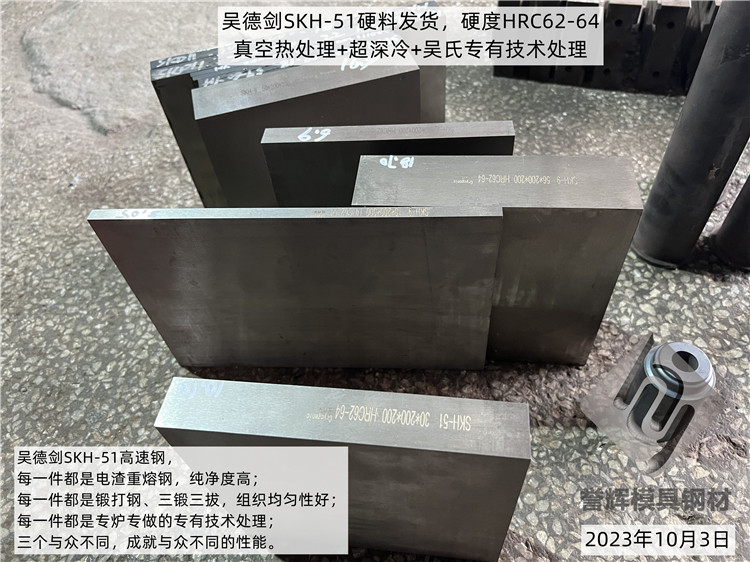
Wu Dejian’s tool steel, the chief of staff of the user, bought everything he had used.