Some people come to me for advice on die steel, thinking that once they know the grade, their problem is solved. But there was one person who, even after learning the die steel grade, spent three months struggling with the issue—yet the problem of the die cracking remained unsolved.
He was stamping 0.15mm-thick 304 stainless steel, a hard material with a hardness of 370–400 HV. He had tried various types of white steel for the punch and cutting edge, but they all wore out easily. After stamping just 1,000 to 2,000 parts, the cutting edge would be worn down, and there were instances of chipping. The parts would come out with burrs, making them unqualified.
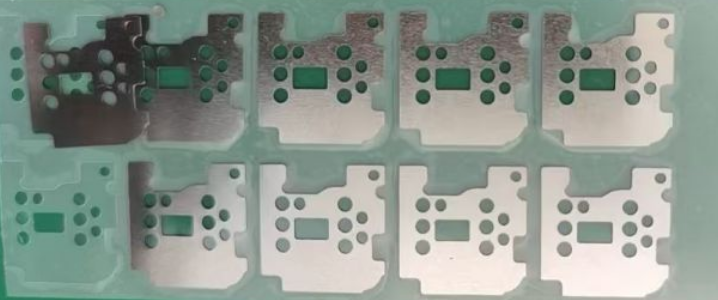
After consulting me, I advised him to use PM23 or PM60, which would solve the problem and extend the mold’s service life. Once he knew the steel grades, he conducted his own tests.
He has now replaced the punch with tungsten carbide, which works quite well. However, after switching the die to ASP23 and ASP60, burrs still appeared after producing just 1,000–2,000 units. His products have strict burr requirements—they must be inspected under 30x magnification. Upon magnifying his current products 30 times, he found numerous burrs and chipping along the cutting edge. Since he couldn’t resolve the issue, he contacted me again to ask which tool steel he should use.
Even if you know the grade of the die steel, there are five or six different grades. If you can’t get die steel with good smelting quality, the performance can’t be guaranteed, and the problem won’t be solved. It may seem like you’ve bought powdered high-speed steel PM23 or PM60, but it’s still prone to chipping.

Another client of mine was stamping 0.3mm-thick, 3/4H-hardened 304 stainless steel—a very hard material. The parts had adhesive on them, and the client required dry stamping without lubrication. He originally used SKH-9 high-speed steel, but after only 2,000 to 3,000 pieces, the sharp corners of the punch would chip off, causing burrs on the parts. He had to disassemble the die several times a day, which was extremely frustrating.
After he contacted me, I recommended PM60 powdered high-speed steel. Now he can punch 50,000–60,000 pieces, with results better than any other die steel he’s tried. The die is now in normal production, requiring edge sharpening about once every two days, and he’s very satisfied.
With powdered high-speed steel, the key factor is the quality of the smelting process. Even if the grade of the die steel is the same, differences in smelting quality and heat treatment processes result in varying performance characteristics, leading to a thousand-fold difference in actual performance. Although you’re currently using PM23 and PM60 grades, the fact that your dies start flaking off like grains of rice and producing burrs after just 1,000–2,000 presses is unacceptable. This clearly demonstrates that the performance of your current mold steel is subpar. You’ve been outsmarted by your own cleverness—you’ve spent a lot of money but haven’t solved the problem.
My clients stamp materials that are thicker and harder than yours, and they do so without lubrication—dry stamping—under even harsher conditions. Yet, using Yuhui PM60, they can achieve 50,000 to 60,000 stamping cycles. Compare that to your 2,000 cycles before the cutting edge wears down—a 25-fold difference. It’s truly like night and day.
So when buying die steel, focusing solely on price will cost you. While the price per kilogram may seem low, when you factor in service life, it actually ends up being more expensive. But many short-sighted business owners fail to see this—they only look at the price per kilogram.
*************
Wu Dejian’s tool steel, the chief of staff of the user, bought everything he had used.