Today I attended the 2026 Annual Conference of the Guangdong Heat Treatment Association. My main purposes were to receive our membership plaque and to stay updated on industry trends. Here are a few points I’d like to note down:
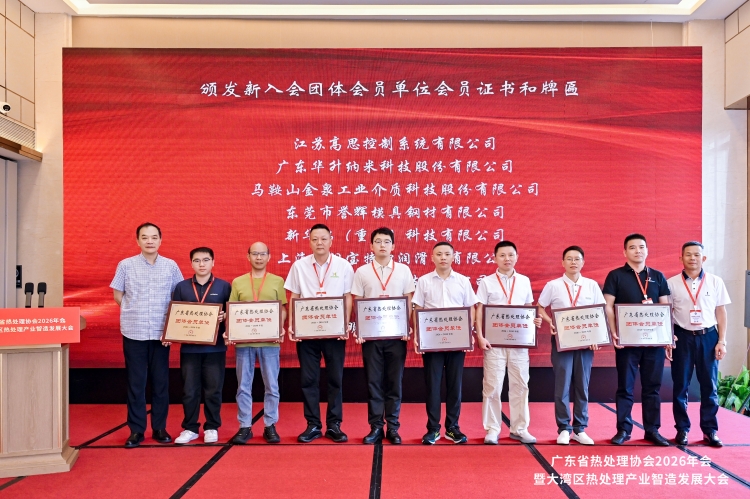
1) China’s manufacturing sector is truly advanced, with a well-developed industrial ecosystem. These days, heat treatment furnaces are produced using a modular approach—many components are purchased off-the-shelf and simply installed. You can even choose optional features and customize the design, which would be unimaginable overseas.
Our production lead times and product iteration speeds are so fast that foreigners find them hard to fathom, but to us, this is perfectly normal—it’s always been this way.
2) A university professor’s presentation can be quite impressive and leave a strong impression, but looking back now, you can’t quite put your finger on what made it so impressive.
But today’s presentation on heat treatment by the BYD engineer was, in my opinion, very useful. He explained how workpieces are loaded into the furnace, how different loading methods affect airflow, and which methods increase part deformation.
He discussed the differences between gas quenching and oil quenching in terms of cooling media, and how these affect microstructural stress and thermal stress.
He explained how different gases result in varying cooling rates and differ in their ability to carry away heat.
He explained how different cooling media affect the surface quality of parts and why these differences occur.
He discussed how different pressures affect cooling rates, as well as how fan speed influences airflow—and consequently, cooling rates.
He also covered how the direction of the fan affects airflow and at what points in the process the airflow direction should be changed to achieve the best cooling results.
All of this information relates to specific problems we encounter and need to address in our actual production.
The report may not look fancy, and the data isn’t earth-shattering, but every point is useful and capable of solving specific problems.
Comparing the two reports, I feel that the one from the production front lines is the more compelling one.
This also made me realize that when it comes to making videos, writing articles, or hosting live streams, it’s the solutions to problems that attract people—no one wants to listen to dry knowledge dissemination.
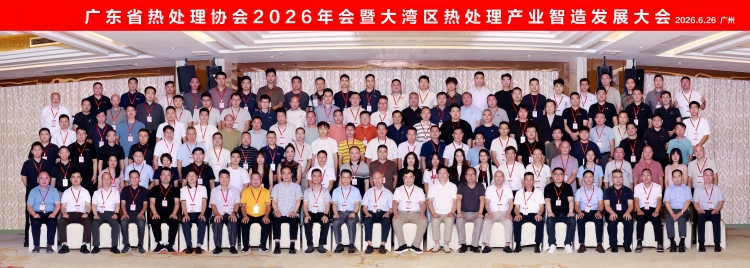
3) The entire industry chain—from upstream to downstream—is upgrading, and everyone is moving toward high-end solutions. Although they can’t articulate exactly how their heat treatment furnaces are better than others’, they’re all using high-performance, smart components.
This also illustrates one point: everyone has realized that there’s no future in the low-end market.
Sometimes you feel lost, and sometimes you feel exhausted. But if you go out for a walk and get a sense of industry trends, you’ll no longer feel lost or tired.
*************
Wu Dejian’s tool steel, the chief of staff of the user, bought everything he had used.