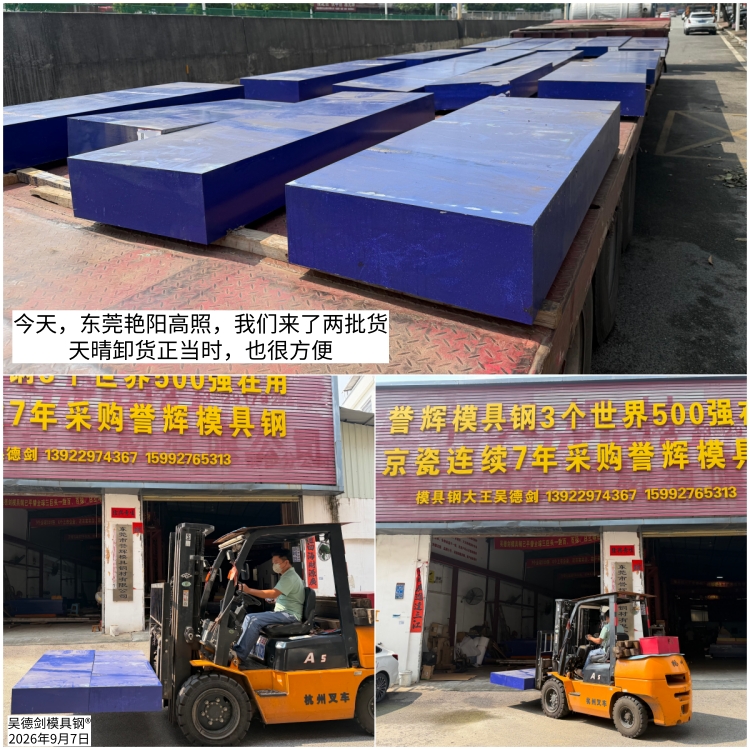
Over the past two months, we’ve received a new shipment of 100 metric tons of mold steel, which is currently being tested by a third-party lab. This testing seems both useful and useless. It’s useless because the tests don’t reveal any issues—the mold steel has no quality problems, and it’s exactly what we want. It’s useful because, after the testing, my confidence in selling the product has greatly increased, ensuring that the mold steel we sell is free of quality issues. I’m very pleased that none of the after-sales service cases at Yuhui Mold Steel are related to quality issues.
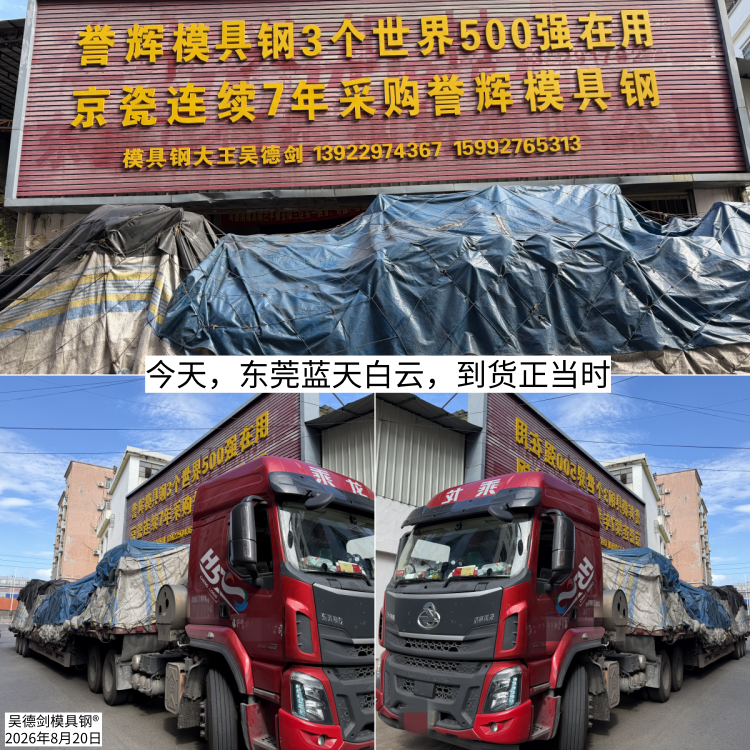
The quality of mold steel is ensured through a series of strict checks. Every piece of mold steel entering Yuhui’s warehouse undergoes third-party testing—a practice rarely seen among our peers, but one our factory adheres to in accordance with brand requirements. Thanks to the superior quality of our mold steel, we have secured long-term procurement contracts with three Fortune 500 companies; Kyocera, for instance, has been purchasing Yuhui mold steel for seven consecutive years.
If you have specific requirements for the quality and performance of your mold steel—if the mold steel you’re currently using is inconsistent in quality, resulting in unstable mold life, and you can’t pinpoint the cause—then you should look into the quality of the steel’s smelting process.
Several factors determine the performance of mold steel: alloy composition, smelting quality, and heat treatment processes. These three elements form a tripartite relationship where each supports the others; if any one is lacking, the mold steel’s performance will suffer, and your mold life will remain unstable. However, in today’s mold steel market, smelting quality has been overlooked, with the assumption that as long as the alloy composition meets standards, performance is guaranteed.
Users have been led to believe that as long as the material meets national standards and the alloy composition is within specifications, the performance of the die steel is guaranteed. Yet, the finished dies often develop problems here and there—you can never pinpoint the exact cause, nor do you know how to improve the situation. At this point, you need to consider looking for the problem in the smelting quality.
The smelting quality of mold steel encompasses the purification process—including purity levels and the presence of harmful impurities—as well as the appropriateness of the forging process, such as whether it involves “three forges and three draws” or “six-sided forging.” It also involves checking for structural eccentricity, microscopic cracks, and whether inspections meet standards. This goes far beyond simply ensuring that the alloy composition meets specifications.
To ensure the performance of mold steel, we don’t just rely on proprietary alloy compositions and smelting processes—we also verify that quality standards are met by commissioning third-party testing. Only after passing all tests and meeting all standards can we feel confident in selling our products, ensuring the mold steel we ship is free of quality issues and safe for our customers to use.
If the mold steel you’re currently using has inconsistent performance and you’re unsure where the problem lies, feel free to reach out to me. I’m Wu Dejian, the “Mold Steel King,” from Dongguan Yuhui Mold Steel. Yuhui Mold Steel is used by three Fortune 500 companies, and Kyocera has been sourcing from us for seven consecutive years.
I have resolved complex challenges related to mold material selection, manufacturing, and usage for over 4,000 companies. I am confident that when it comes to selecting and applying mold steel, I can serve as your chief advisor and help you avoid costly mistakes.
*************
Wu Dejian’s tool steel, the chief of staff of the user, bought everything he had used.